

Making your Safety Management System (SMS) work in practice
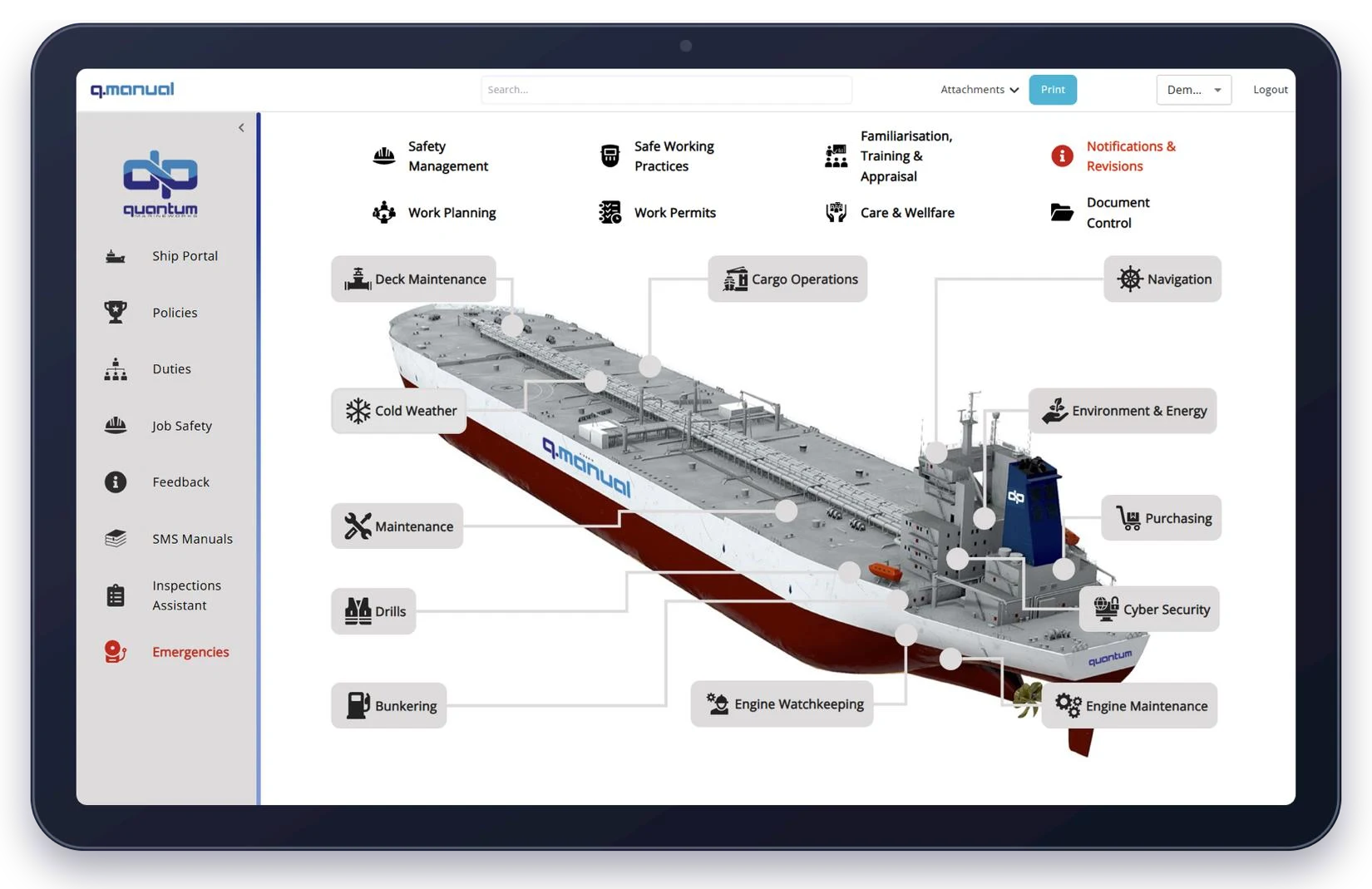
q.manual restructures the SMS you already have around the people who use it, by role, task and situation, so crew and shore staff find the right action at the moment it matters.
An SMS improves safety only when crews can find it, understand it and apply it.
Management systems lose force between the office and the deck. We measure it simply:
by the 2nd mate
Human factors sit behind most marine casualties, and the cost is high.
of reported safety investigations list human action or behaviour among the events or contributing factors (2014 to 2023).
The cost of losses
Above the waterline: annual insured losses per ship paid by P&I. Below it: uninsured losses, at least six times higher.
Declining attention span
More pages, more manuals, more frequent crew changes, and less attention to give them.
Our crew doesn't have a documentation problem. They have a retrieval problem.
The answer is almost always somewhere in the SMS. The difficulty is finding the right part of it, quickly enough, when a job is about to start or a situation is developing. Three things make that harder every year.
Too many requirements
A typical SMS now runs to more than 3,000 pages of text, over 15 ship-specific manuals and 400+ forms, alongside a maintenance programme and several stand-alone applications. Every new regulation, inspection regime and company standard adds to it, and the crew is expected to know where each requirement sits.
Built around documents
Manuals are organised the way they were written: by manual, chapter and section. The person using them starts from a task or a situation, such as a bunkering operation, an enclosed space entry or an alarm. Before they can act, they must know which manual applies and where to look in it. Crews rotate between vessels, ranks and companies, so many are working with a system they have not had time to learn.
A PDF is not the answer
Uploading the same manuals to a portal or a searchable PDF changes where the documents are kept, not how they are organised. A keyword search returns pages from several manuals, and the user still has to decide which one applies to their role, their ship and the job in front of them. The structure is still built the wrong way round.
q.manual starts from the other end: from the person, the task and the situation, and brings the relevant SMS content to them.
The Cognitive Information Delivery System (CIDS©)
CIDS is the methodology Quantum MarineWorks developed to answer one question: how should a management system be structured so that people find and apply the right information under real operating conditions? It draws on four established disciplines from human factors and safety science. q.manual is the platform that puts it to work onboard and ashore.
How people and systems work together in complex operations. Used to map who needs which SMS information, for which task, at which moment.
Attention, memory and mental workload. Used to present content so it is quick to scan and easy to understand, even when the user is tired or under pressure.
How operations stay safe when conditions change. Used so the system holds up under real operational complexity, not only during an audit.
Designing around real users and their tasks. Used to organise the SMS by role, task and situation instead of by document.
Not a search bar. An engineered outcome. A search bar leaves the user to work out where to look and which result applies. CIDS designs that route in advance, to shorten the time from the moment information is needed to the moment it is found, for a real crew member, on a real ship, in a real situation.
Design goal: find what you need in 8 seconds
One manual, different uses
Each situation onboard and ashore calls for the same SMS information in a different form.
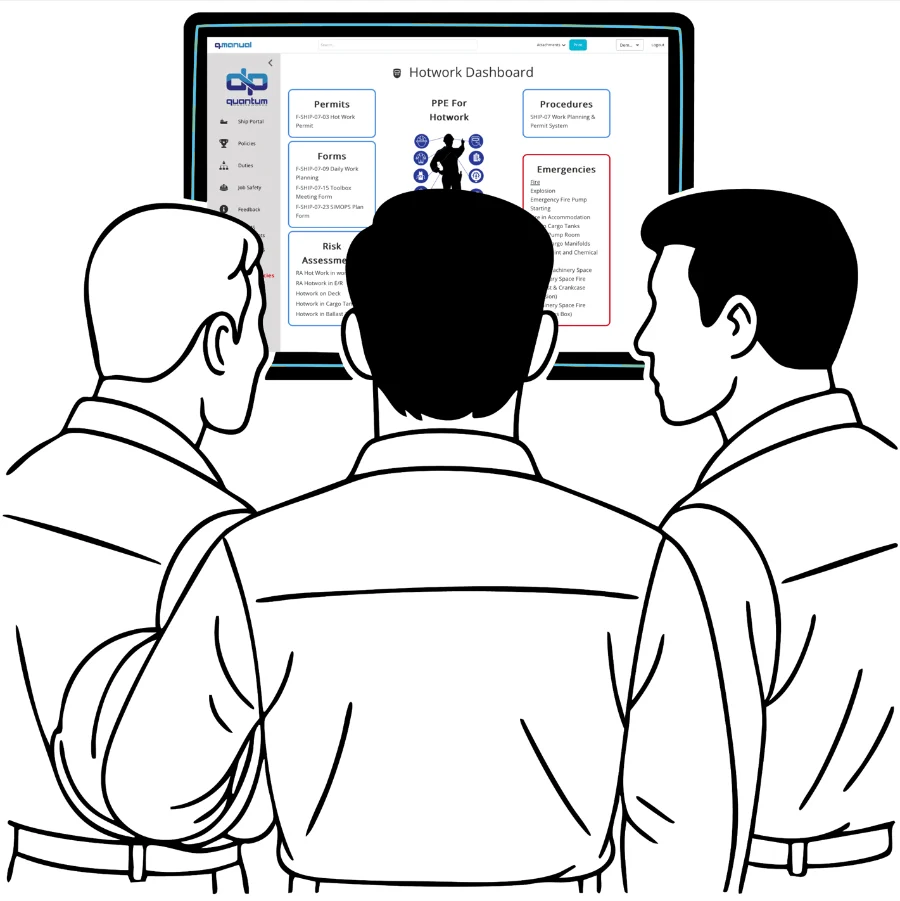
Before the job
Job-specific screens bring together everything needed to plan the work.
- PPE
- Permits
- Procedures
- Risk assessments
- Emergencies

During the job
Everything for the task in one place, close to the work.
- Procedure steps
- Guidance
- Checklists
- Forms
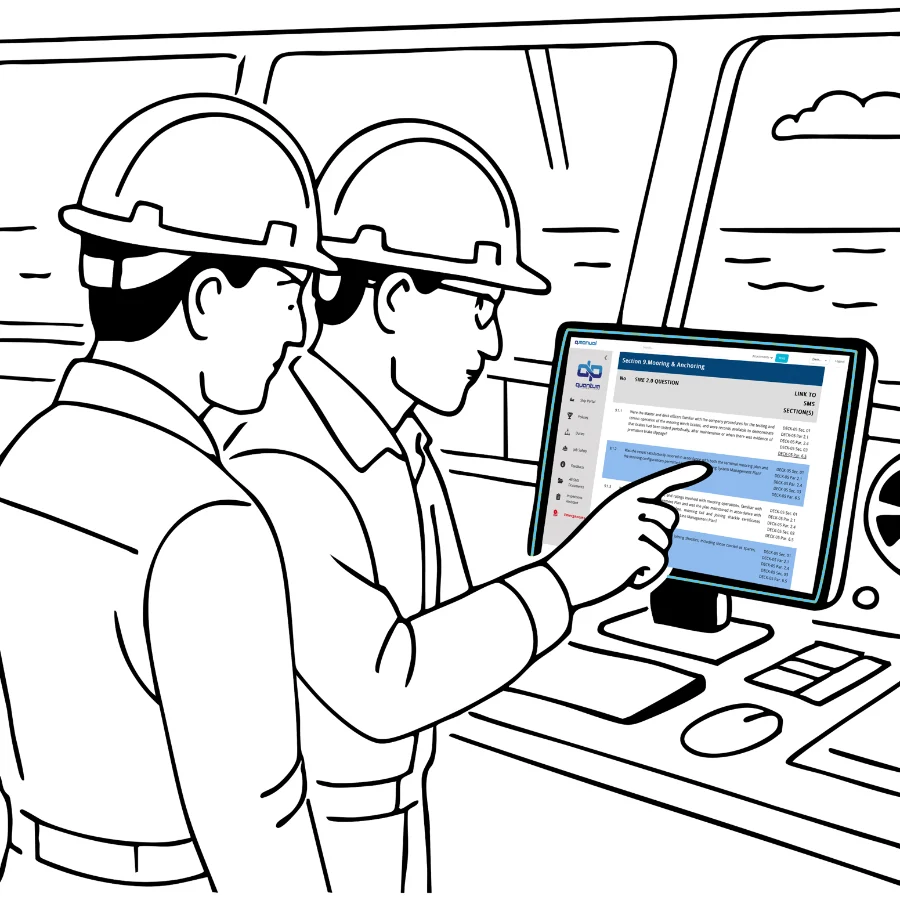
At inspections
Requirements linked with the relevant SMS text.
- OCIMF SIRE 2.0 and TMSA
- ISM and ISO standards
- RightShip RISQ and DryBMS
- RightShip Crew Welfare Self-Assessment


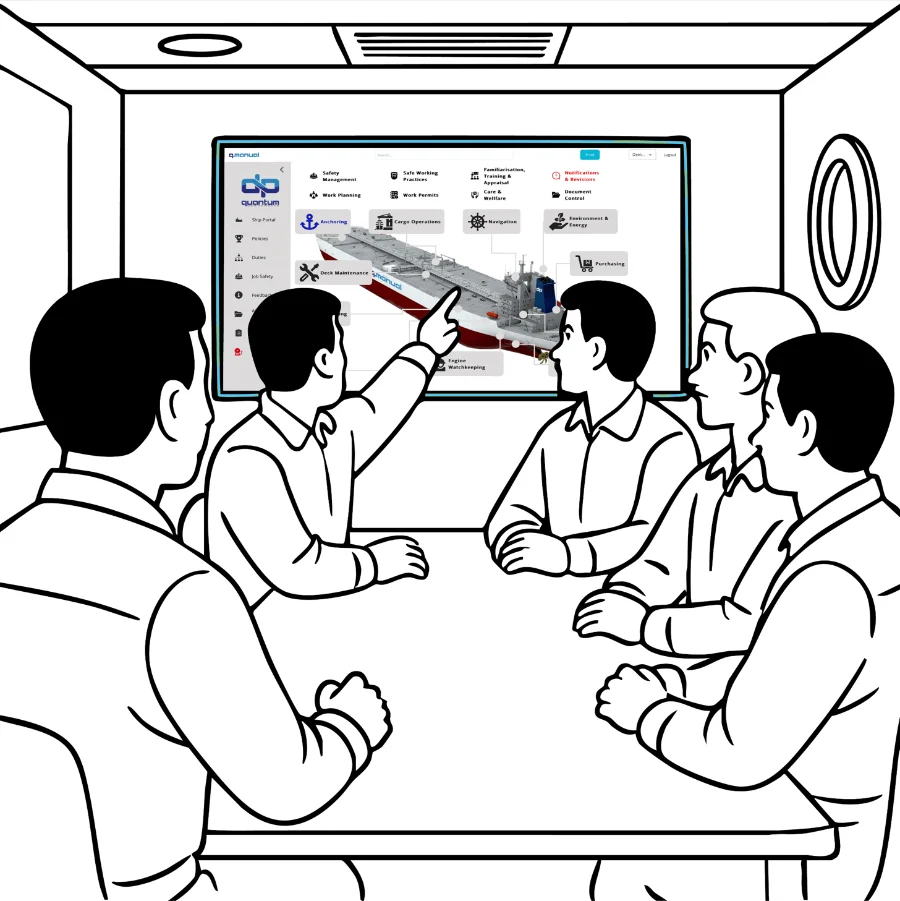
For training
Use the SMS itself as the training material.
- Duties
- Procedures
- Emergencies
- Inspections
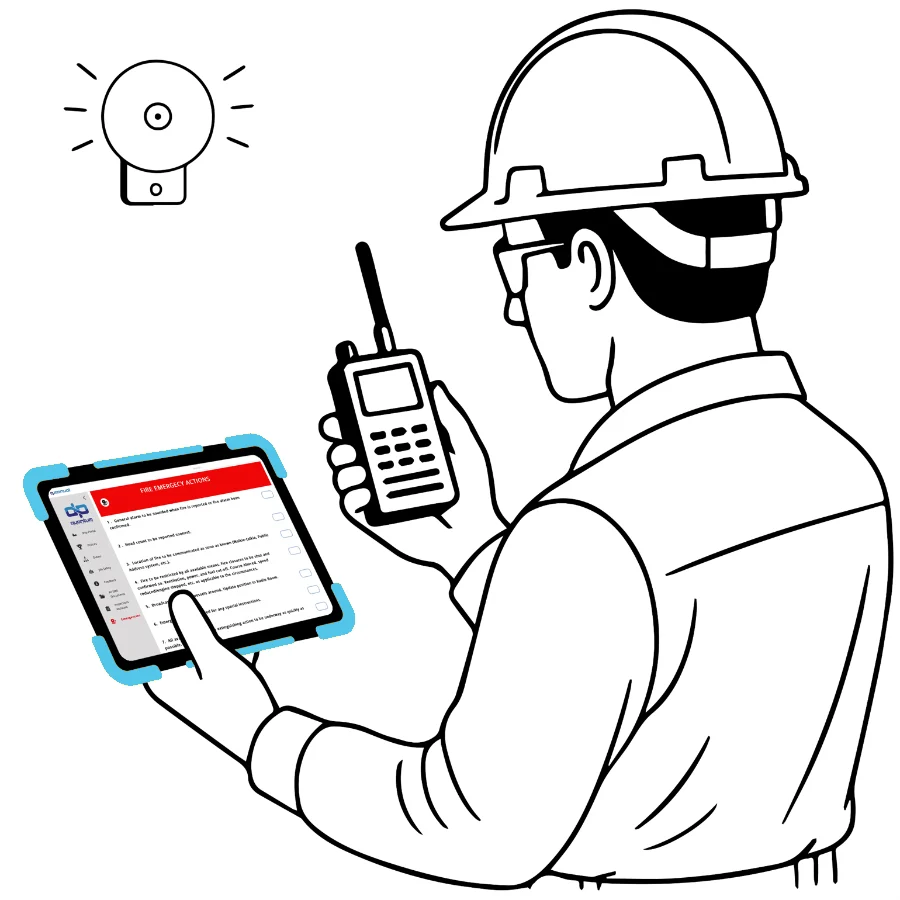
During emergencies
Instant access to what each person needs to do.
- Action checklists
- Duties
- Contacts
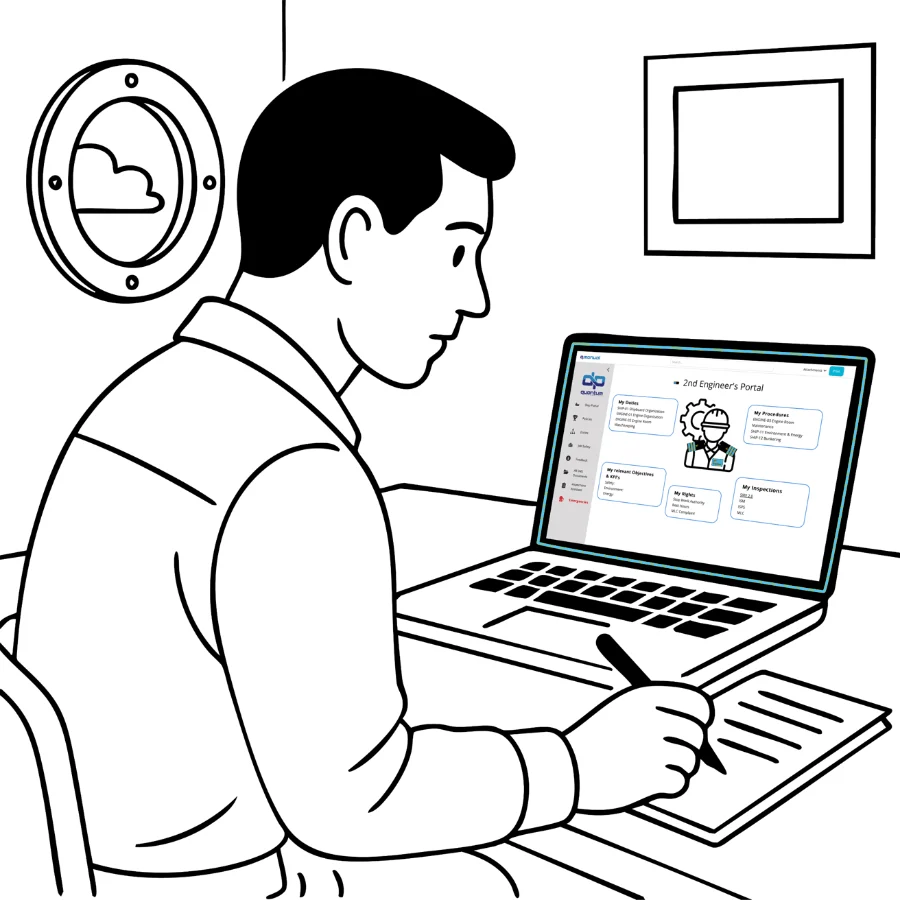
For familiarisation
Rank-specific portals get new crew operational faster.
- Reduce onboarding time
- Boost confidence
- Safety from day one
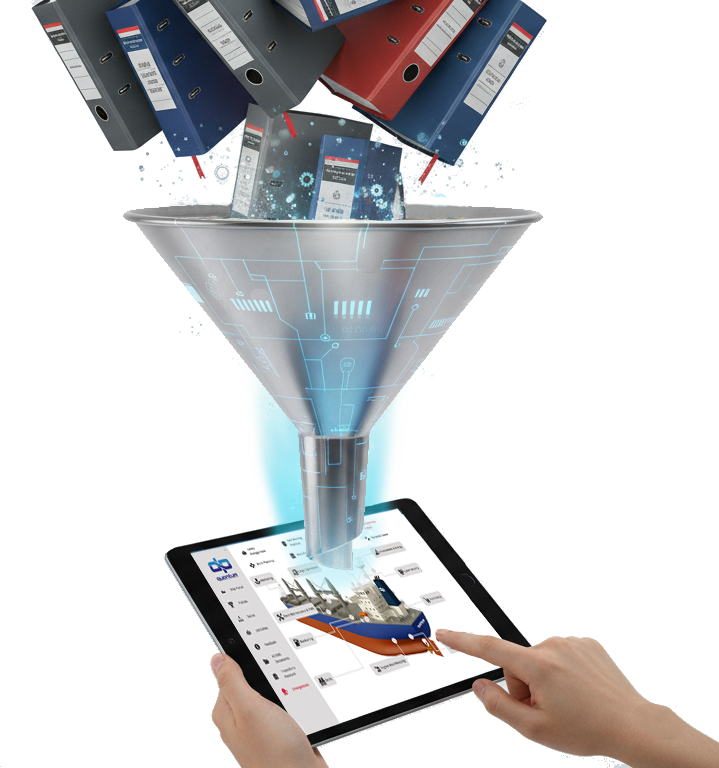
All SMS information. One point of access.
Every manual, plan, circular and alert competes for the same limited attention of the crew. q.manual brings them together in one place, structured around the user.
What it is, and what it is not
"It's better to do one thing well than ten things poorly."Heather Hart
Access options that fit your fleet
Online
Everywhere there is internet
- Access from anywhere
- Simple user access management
- No local installation
Local network
Any device on the ship's network
- Not internet dependent
- Ship-specific documents
- Faster than web access
In-device
Anywhere the device is
- Needs no connection at all
- Ship-specific documents
- Redundancy across devices
What if q.manual reduces human errors by 20%?
Experience since 2002
Quantum MarineWorks has developed, reviewed and audited Safety Management Systems for ship managers, vessels and ports. q.manual is what we built from that experience.
See your own SMS in q.manual
A short online session with your HSQE team, using situations from your own operations, so you can judge how q.manual would work onboard your fleet.
- How crew find the right procedure in seconds, onboard and ashore
- SIRE 2.0 requirements linked to the relevant SMS sections
- Rank-specific views for familiarisation and training
- Online, local network and in-device access options
Request your demo
Tell us a little about your fleet and we will be in touch to arrange a time.